
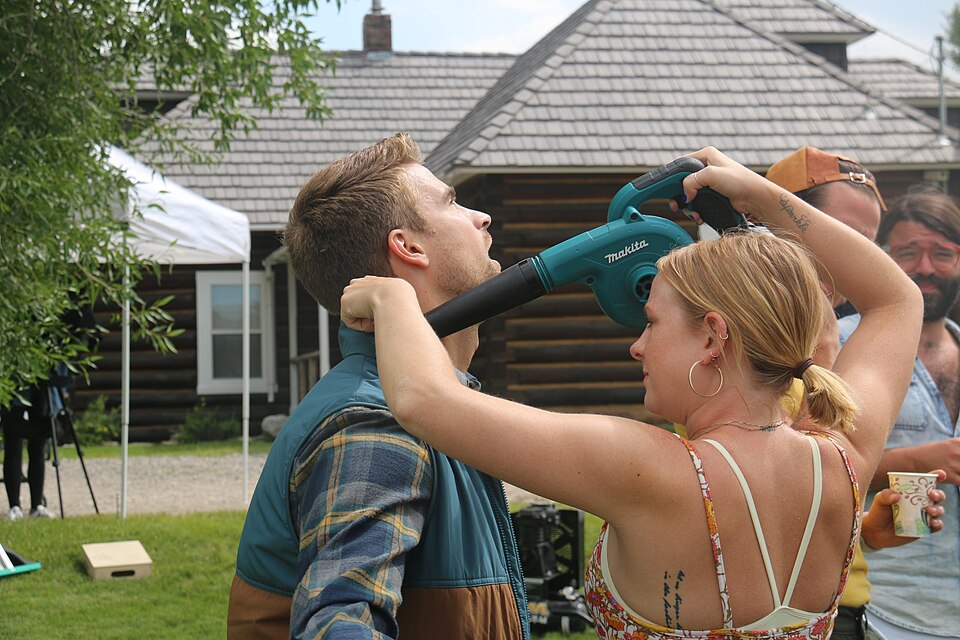
Photo: USFWS Mountain Prairie, Keeping Cool (46319680512), CC BY 2.0
Normally the Energy group focusses on ways to stay warm and conserve heat but for this summer we were all trying to do the opposite and searching for ways of doing so as cheaply and sustainably as possible. Hence fans, large hats and loose clothing, along with closed curtains and windows being opened and closed at the right time of day. Some of us were kept cool by trees close to our houses, others installed exterior shading over their windows and the very lucky ones, I guess they know who they are, were able to run their heat pumps in reverse to effectively refrigerate their homes. This technology, based on air-to-air heat pumps is still relatively new but there will be some grants available for them, although as ever there are complications. Which has recently published a useful guide to heat pumps and to see them in action you can visit a heat pump owner in your own locality.
If we hadn’t already noticed it, the government’s phone alert certainly drew our attention to the extreme weather and those of us who had been pushing for a ban on disposable barbecues were hugely relieved when a temporary national ban was finally announced, on top of the SMDC Public Spaces Protection Order to ban lighting fires, barbecues, fireworks and sky lanterns at high-risk locations across the Moorlands. Given the fires that had already occurred on tinder dry vegetation, we owe a big debt of gratitude to all those involved.
Nevertheless, the heatwaves have highlighted our lack of preparedness for extreme heat. And the provision of natural defences, such as tree cover, particularly in our towns, compares poorly with European equivalents. The average UK urban area is just 17.9% tree-covered, against a European average of around 30%. And poorer neighbourhoods are less protected by trees. There appears to be a strong case for prioritising tree planting in such neighbourhoods as part of moves towards adaptation.
Meanwhile, many of us have been drawing on our experiences of hotter countries to guide us in keeping cool. Two lessons drawn from cycle rides through Central Europe and the Balkans in extreme heat have been how much cooler cycling is than walking. The rider is raised sufficiently high above heat reflecting surfaces to get a measure of cooling, traditional helmets are well insulated and ventilated and the forward movement creates a cooling breeze. The trick is not to stop until sufficient shade can be found. In most cases that will be in a wood, forest or at least several layers of tree canopy.