
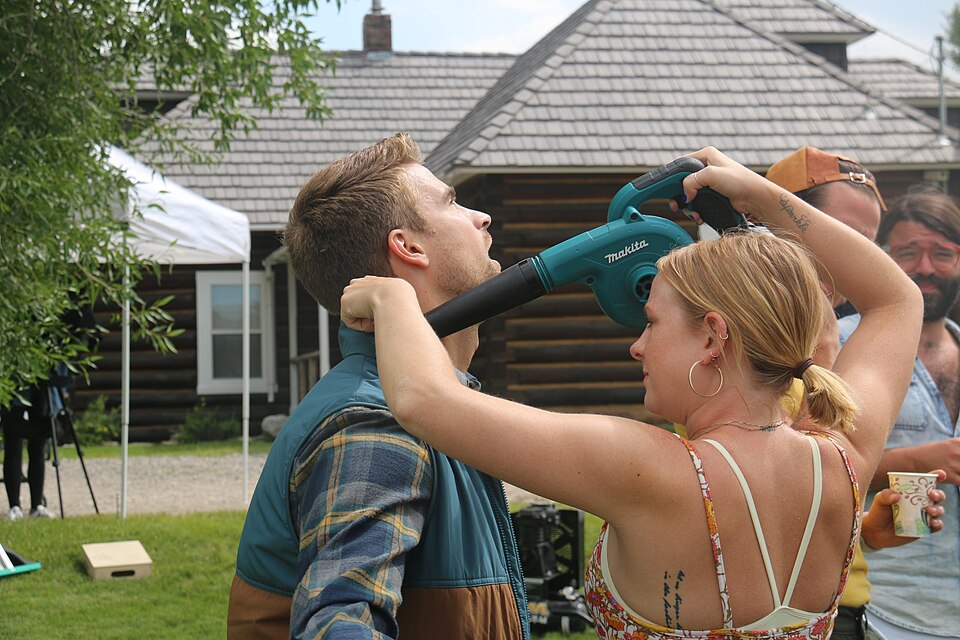
Photo: USFWS Mountain Prairie, Keeping Cool (46319680512), CC BY 2.0
Normally the Energy group focusses on ways to stay warm and conserve heat but for this summer we were all trying to do the opposite and searching for ways of doing so as cheaply and sustainably as possible. Hence fans, large hats and loose clothing, along with closed curtains and windows being opened and closed at the right time of day. Some of us were kept cool by trees close to our houses, others installed exterior shading over their windows and the very lucky ones, I guess they know who they are, were able to run their heat pumps in reverse to effectively refrigerate their homes. This technology, based on air-to-air heat pumps is still relatively new but there will be some grants available for them, although as ever there are complications. Which has recently published a useful guide to heat pumps and to see them in action you can visit a heat pump owner in your own locality.
If we hadn’t already noticed it, the government’s phone alert certainly drew our attention to the extreme weather and those of us who had been pushing for a ban on disposable barbecues were hugely relieved when a temporary national ban was finally announced, on top of the SMDC Public Spaces Protection Order to ban lighting fires, barbecues, fireworks and sky lanterns at high-risk locations across the Moorlands. Given the fires that had already occurred on tinder dry vegetation, we owe a big debt of gratitude to all those involved.
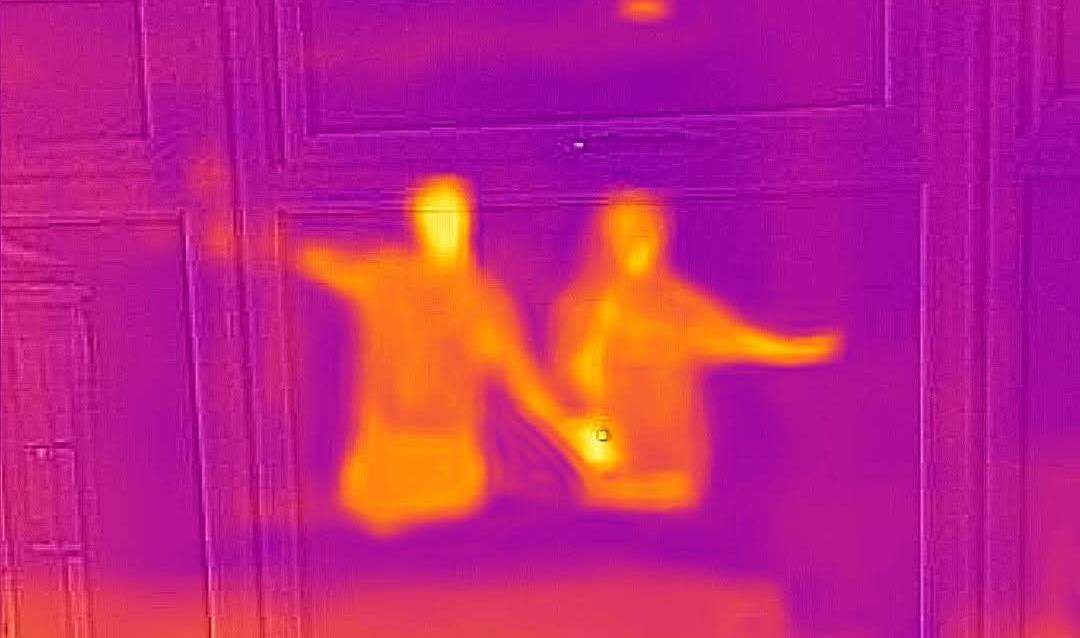
As reported in our previous newsletter, our thermal imaging camera has been used by Alana Wheat and Xander Wood, who had just brought their first home and were excited to finally get to use the camera to check over sources of heat loss before starting on refurbishments.
An initial thermal imaging assessment revealed significant heat loss areas and outdated systems in the new home, which guided their plans for future refurbishments.
These included pipes on outside walls, draughts and heat loss around air bricks, as well as a lack of underfloor insulation, in addition to the more obvious problem of an outdated heating system, a poorly insulated loft hatch and a bay window with cracks allowing draughts.
They’ve since introduced upgrades to the heating and plumbing systems, which have improved heating efficiency and reduced heat loss.
A key part of the survey is their set of reflections on the process. These stress the importance of thorough documentation and accurate temperature testing. More photos during the process would have been helpful; temperature spots are crucial for accurate comparison, while testing temperatures before taking photos is essential to avoid inaccuracies.
To see their full report with all the relevant thermal images, follow the link below:

It’s 10 years since the groundbreaking Paris Agreement in 2015, so how did we do? We all know we’re way off target and there’s a huge amount yet to be achieved but it may still be worth reminding ourselves of the positives that bring hope for the future. Among these, of course, was the call for local authorities to declare a climate emergency, which incidentally led to the formation of MCA.
To get a dispassionate overview of the progress and what still needs to be done, we’ve looked at the report 10 Years Post-Paris: A decade that defied predictions produced by the ECIU (Energy and Climate Intelligence Unit).
It compares what was expected then with what’s been achieved now — tracking progress across clean energy, policy, emissions, jobs and more. The report is full of graphs and images illustrating the progress that has been made and debunking the gloomiest predictions of the naysayers.
Nevertheless, they acknowledge that we still have a long way to go to limit heating to ‘well below 2°C’, with ‘every fraction of a degree mattering’. We in the UK are not exempt from climate uncertainty, with our news feeds full of floods, a shortfall in British wheat and possibly the threat of Canadian style winters as a key Atlantic current known as the AMOC (Atlantic meridional overturning circulation) continues to weaken.
The key for now is to keep going and ignore the siren calls from those who think we should restart drilling or just pretend it will all go away. Also, how much of this is down to the consumer? We can all do our bit but ultimately the heavy lifting needs to be done by governments, industry, corporations, legal entities, banks and financial institutions. Our best contribution may be to consider carefully how we vote, spend and invest.
Despite being long, the report is very accessible. We strongly recommend it to anyone seriously interested in the topic. See more for a few snippets.
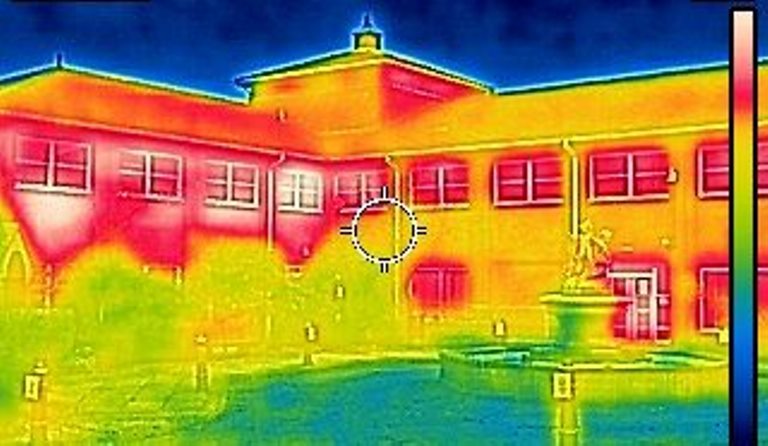
A few years ago, flush with our new toy, two members of our Energy team took a photo of Moorlands House on a Sunday in midwinter in a cheeky bid to draw attention to the building's heat loss.
To their credit, SMDC responded by buying their own heat camera to use on testing their buildings. This was a popular item on display at our recent Youth Conference.
Better still, Cllr Nigel Yates, Cabinet Member for Climate Change and Environment, when speaking to the students used the antiquated and hard-to-control heating system in the building as a good analogy for the planet's problem with overheating and the difficulties involved in bringing temperatures down.
Now that temperatures are dropping, we are making our camera available again for those who want to test the temperature leakiness (or otherwise) of their own homes.
To register an interest, please fill in the form below.
REGISTER HERE
National Planning Policy is now strongly supportive of renewable energy but, together with Local Plans, that policy attempts to ensure that solar farms, wind turbines or battery storage systems are located in ‘the right places’. But the subject raises legitimate concerns, and this brief note explains in outline the factors that go into a planning decision. These factors are called ‘material’; other issues are ‘non-material’; I touch on some of these wider issues, too.
Renewable Energy in the Moorlands
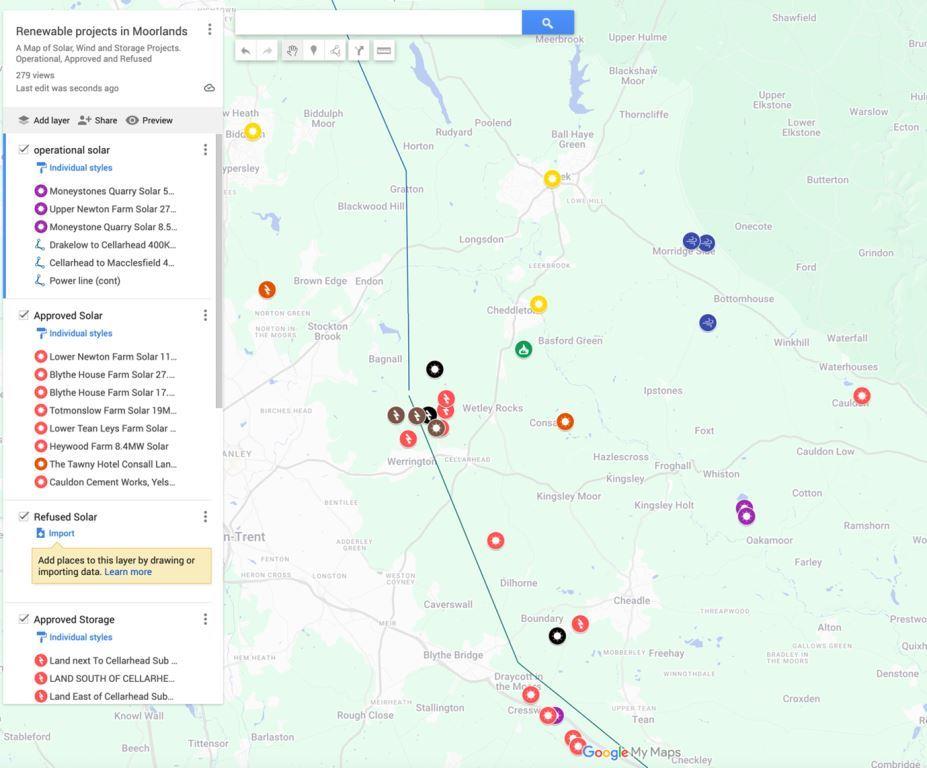
In recent years the Moorlands has seen a significant number of renewable applications. The (non-definitive) map above was created by Moorlands Climate Action to help keep track. The map shows how closely projects follow the main 400kV power line from the Trent Valley (where the old coal-fired power stations were) to Macclesfield and beyond. Renewable energy typically needs a close connection to the National Grid.

Good weather and the rapid build-up of solar capacity meant that the UK generated more clean energy from the sun by mid-August than it did in the whole of last year. For a short period on July 8th, solar met 40% of the UK’s total needs; between gloomy January and sun-drenched July the average contribution ran at around 10%. But events elsewhere have shown the perils of building renewable generation capacity without accompanying investment in the grid infrastructure. In April, 58m Spanish and other Iberian customers were left without power for up to five hours when the grid shut down. The precise cause and sequence of events are still fiercely contested but no-one doubts that inadequate storage and voltage frequency stabilisation capacity was at the root of the crash.
The UK’s main bottleneck is transmission – crudely, moving power from where it is made (such as Scottish wind farms) to where it is used (further south in England). Last year, wind farms were paid to switch off for 13% of the time they should have generated power, according to the grid operator NESO. That costs consumers £400m. It’s to eliminate those costs that the Grid is developing a number of large-scale pylon and cable projects – the nearest to the Moorlands is in Derbyshire’s Amber Valley. But storage is also a crucial part of the equation, helping even out the supply and demand of intermittent renewable energy over time. It also helps keep the Grid running within a tiny band of the required 50Hz frequency.
- Scope for Community Energy in the Moorlands?
- Welcoming Warmer Weather and Warmer Homes?
- Members' Trial of our Thermal Camera
- Renewable Energy Projects in the Moorlands - provisional map
- Community Energy in the Moorlands?
- Heat Network Zoning for Moorlands Towns?
- Trialling Our Thermal Camera
- Thermal Images of a 19th Century Moorlands Hill Cottage
- Winter Warming
- Thermal Camera
- Energy Day Report
- Energy Day 2023